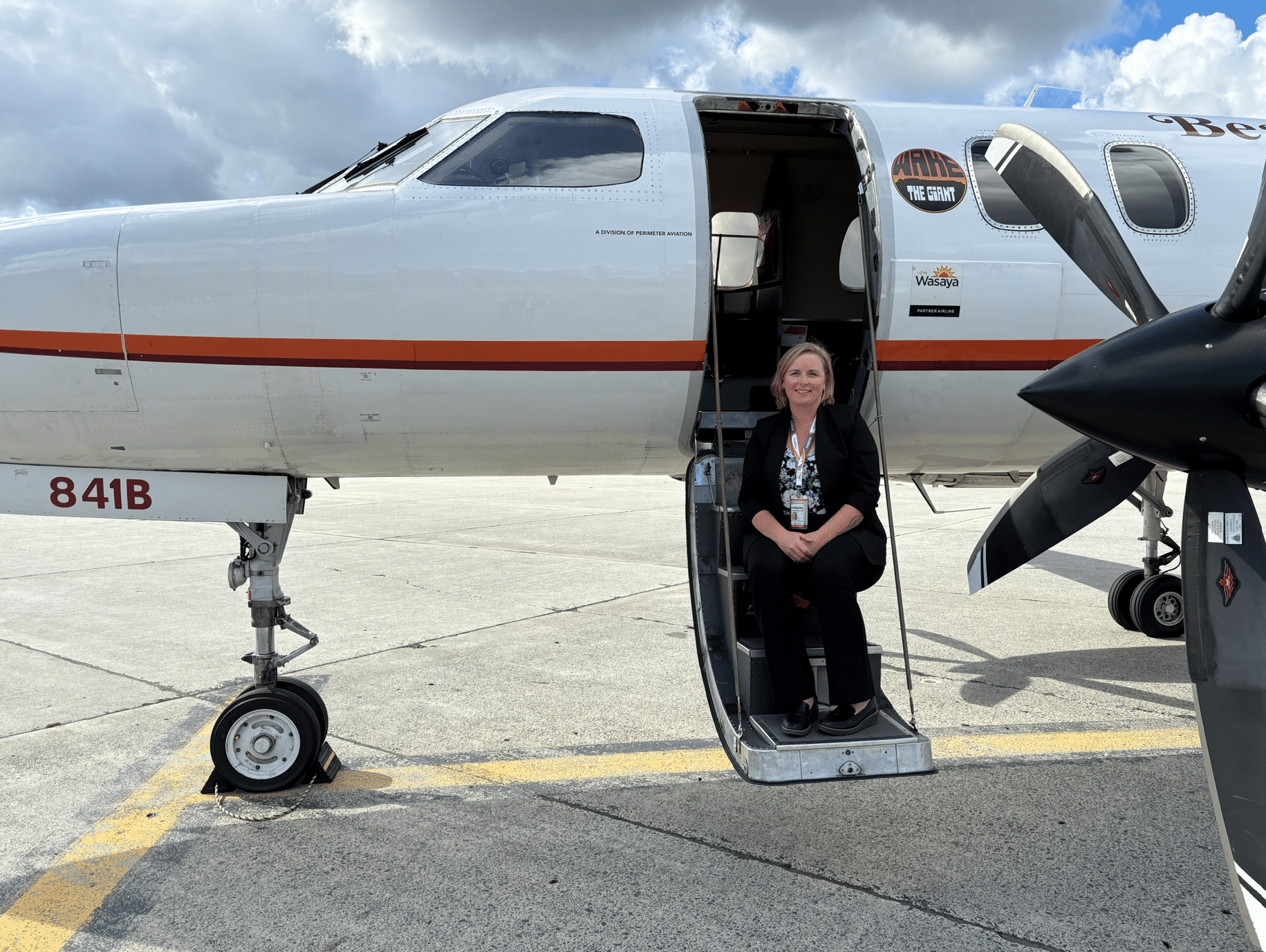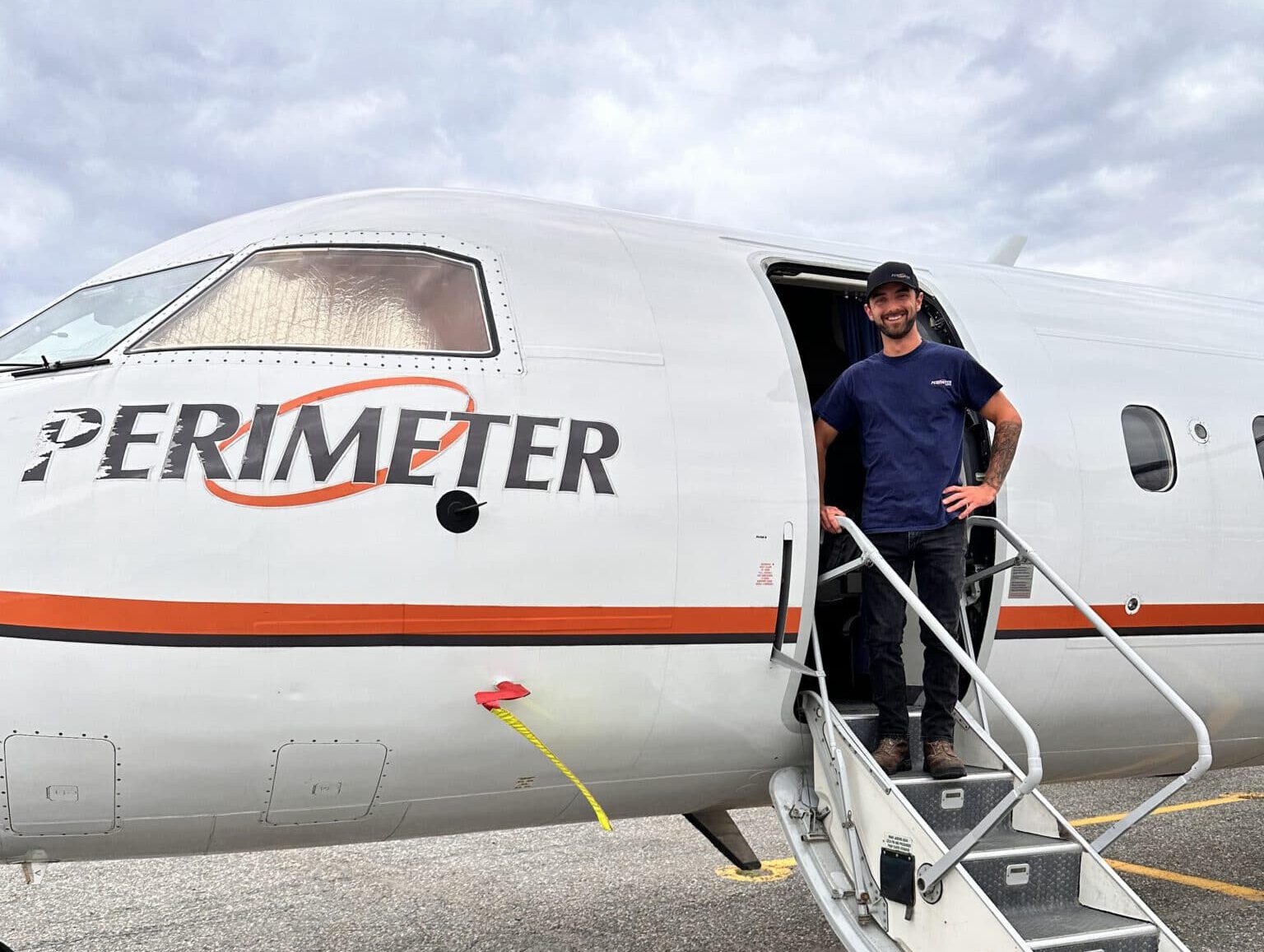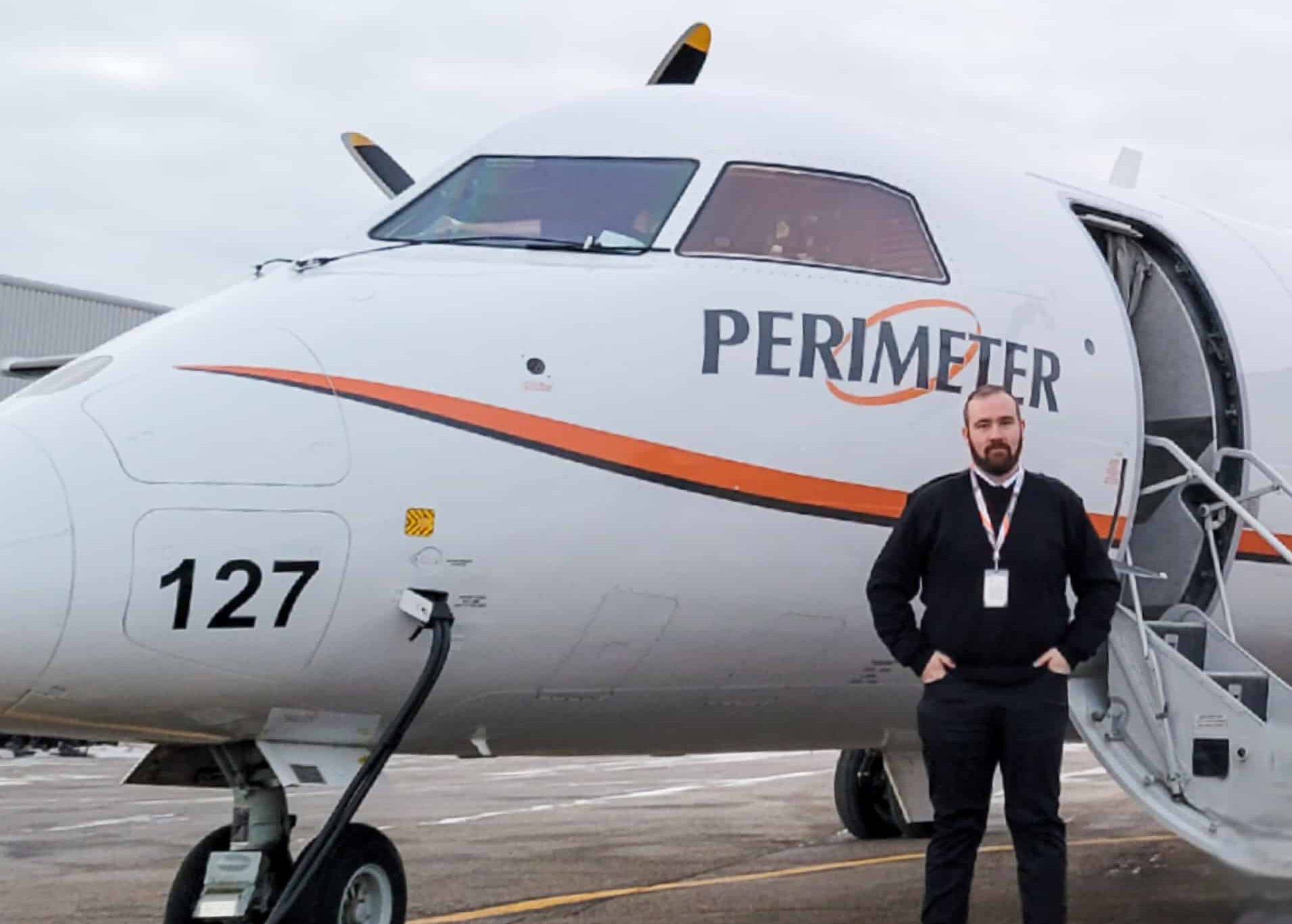

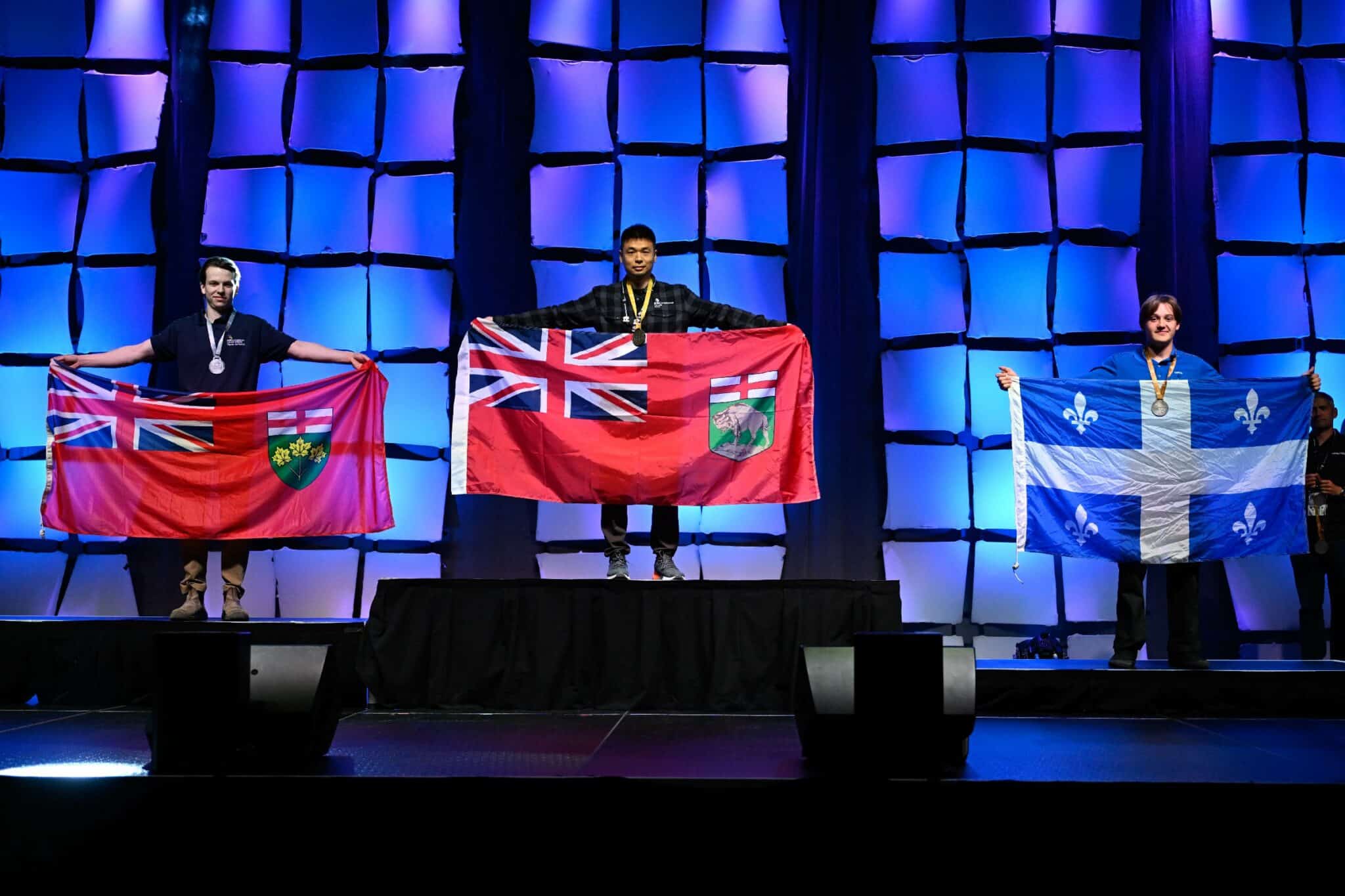
Perimeter Aviation extends congratulations to AME Apprentice, Xin, who earned a gold medal at the Skills Canada Competition, building on his previous success at Skills Manitoba and representing Manitoba among the country’s best emerging skilled trades professionals.
Get to know Xin and learn more about his journey in the Q&A below.
What inspired you to become an AME and what has your journey looked like so far?
I’ve always enjoyed working with tools, and becoming an AME allowed me to pursue that passion. It’s a challenging, fast-paced environment that I find rewarding, with plenty of opportunities for growth that I’m striving for.
I studied Aircraft Maintenance Engineering at Red River College Polytech and graduated in April 2026. Before coming to Canada, I didn’t have a mechanical background, so I worked hard both inside and outside of the classroom to build my skills and I took every opportunity to develop and practice my hands-on skills.
Before joining Perimeter, I developed my mechanical abilities in an automotive shop and gradually transitioned into aviation to become more comfortable working around aircraft. Looking back, all the preparation and effort I invested in gave me a good foundation and helped me earn the opportunity to work as an aircraft mechanic.
For those who may not be familiar, can you explain what the Skills Competition is and what it involves?
I participated in two competitions: Skills Manitoba and Skills Canada in Aerospace Technology (Transportation Sector).
These Olympic-style events are designed to showcase and promote careers in skilled trades and technologies. They bring together secondary and post-secondary students to demonstrate their hands-on expertise, problem-solving abilities, and commitment to continuous learning.
Skills Manitoba – Provincial Level: Each spring, Skills Manitoba hosts a competition where hundreds of students compete in more than 40 hands-on contests, ranging from robotics and 3D animation to hairstyling and Aerospace Technology.
Skills Canada – National Level: Gold medalists from provincial competitions become part of Team Manitoba and advance to the annual Skills Canada National Competition, where they compete against top talent from across the country. This year’s was held in Toronto at the Enercare Centre.
WorldSkills – Global Level: Exceptional national competitors may have the opportunity to represent Team Canada at the international WorldSkills Competition held every two years. While there was no WorldSkills event for me to attend this year, winners from the last national competition will represent Canada in Shanghai, China.
How did you prepare for the competition?
For Skills Canada, we were provided reference materials 30 days before the event. These materials only gave a general idea of what the actual projects might involve. For example, since there would be a turbine engine project, we were given the engine manual along with supporting documents such as AC43.13.
My preparation focused on studying all of the documentation and understanding as much information as possible. I also considered the time limits for each project in the competition, which were generally around two hours and to be completed individually. Based on that, I originally assumed the projects would need to be achievable by one person within the allotted time. Interestingly, that assumption was wrong. During the turbine engine and aircraft projects some tasks were difficult to complete alone, and we were told that we could call on the judges if we needed assistance. It was a good reminder that not everything goes exactly as you expect during a competition.
During orientation, we had the opportunity to inspect the equipment and tools that would be available. This helped me narrow down what some of the projects might be.
In the days leading up to the competition, I tried to prepare for every possible scenario. That approach helped calm my nerves because I felt I had done everything within my control to prepare. Even so, I had difficulty falling asleep before the first day of competition, but somehow, I still woke up feeling energized and ready to compete.
My instructor, Kevin Hussey, served as my coach throughout the process. He provided valuable insight, especially regarding tool control and maintaining an organized work area. He emphasized that the competition is not just about completing the project, it is about the entire process, from interpreting manuals and following procedures to housekeeping and paperwork. Although he wasn’t able to attend the competition, he stayed in contact throughout the event, which gave me a great deal of encouragement and support. I’d also like to acknowledge Red River College Polytech, which sponsored me for the competition.
Was there a specific moment during the competition that stands out as a highlight or a moment you’re proud of?
One moment that stands out was when a judge told me after I had completed the last project, that it was enjoyable to watch me work. Hearing that was huge encouragement and reassured me that I was doing the right things.
At the same time, I’m aware that none of my achievements would have been possible without the support and guidance of many people along the way. Every lesson, every piece of advice, and every bit of encouragement contributed to the final result, and I’m grateful for that.
What do you enjoy most about being an AME?
I enjoy the moment when you use your knowledge and logic to trace the root cause of a snag.
For instance, during the Electrical Wiring Interconnection System (EWIS) project, I troubleshot an anti-ice valve system using wiring diagrams and a multimeter to identify faults, make repairs, and restore the system to proper operation.
The excitement from solving the problem outweighed any nervousness I felt. Moments like that are what make both this competition and the AME profession so rewarding.
What advice would you give to someone considering a career as an AME?
Once you decide to become an AME, commit yourself fully. Put in the effort, use your intelligence, and focus on solving the problems that stand in your way. Believe in yourself, stay determined, and do not let outside distractions discourage you from pursuing your goals.
His achievements are a testament to the power of putting in the effort and always working to improve your skills, and we couldn’t be more proud to have him as part of our team.